Architectural Legacy.
A Refined Second Act.
Intoxicating Views.
Organic Architecture.
This home is a piece of architecture and art, so deeply in tune with its environment that it feels like an extension of the landscape. That’s the point. Nature was the guiding light for Kendrick Bangs Kellogg. Here, we explore this 1968 masterwork, restored with every modern amenity.
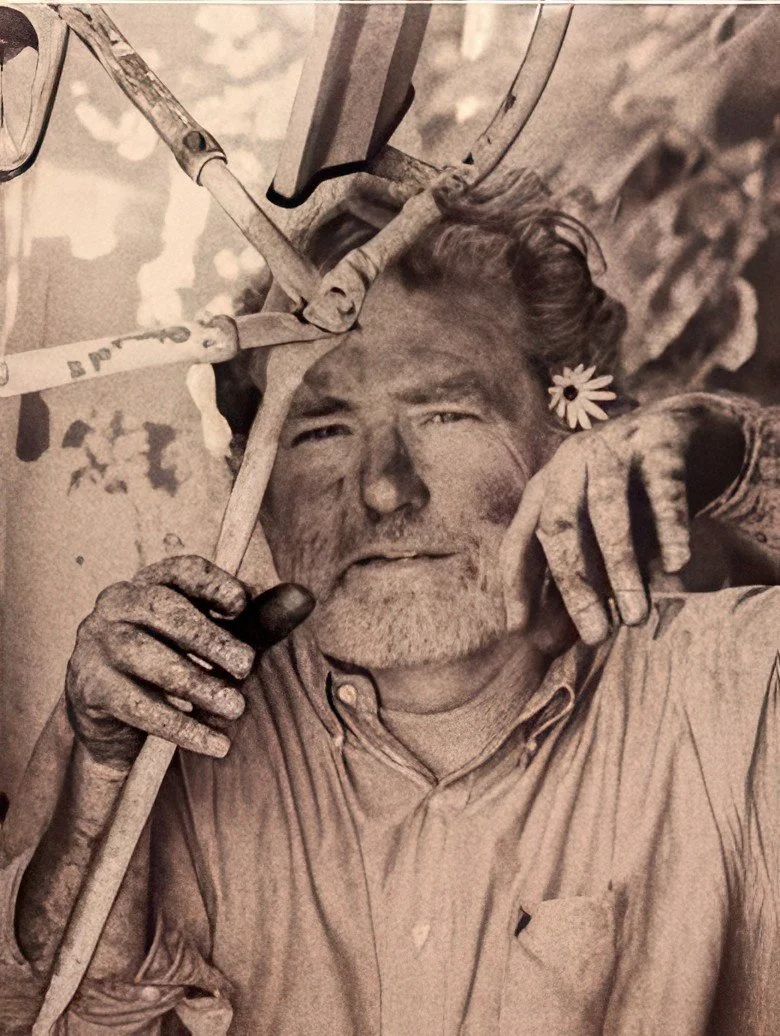
Sun. Sea. Kellogg.
THE GODFATHER OF ORGANIC ARCHITECTURE
The San Diego-born architect expanded the possibilities of organic architecture on a global stage as one of its most expressive practitioners. Kendrick Bangs Kellogg grew up in nearby Mission Beach building forts; he went on to complete over a dozen striking structures, both residential and public, including Lotus House in La Jolla, the Doolittle House in Joshua Tree, Onion House in Hawaii, and the Hoshino Stone Chapel in Nagano, Japan.
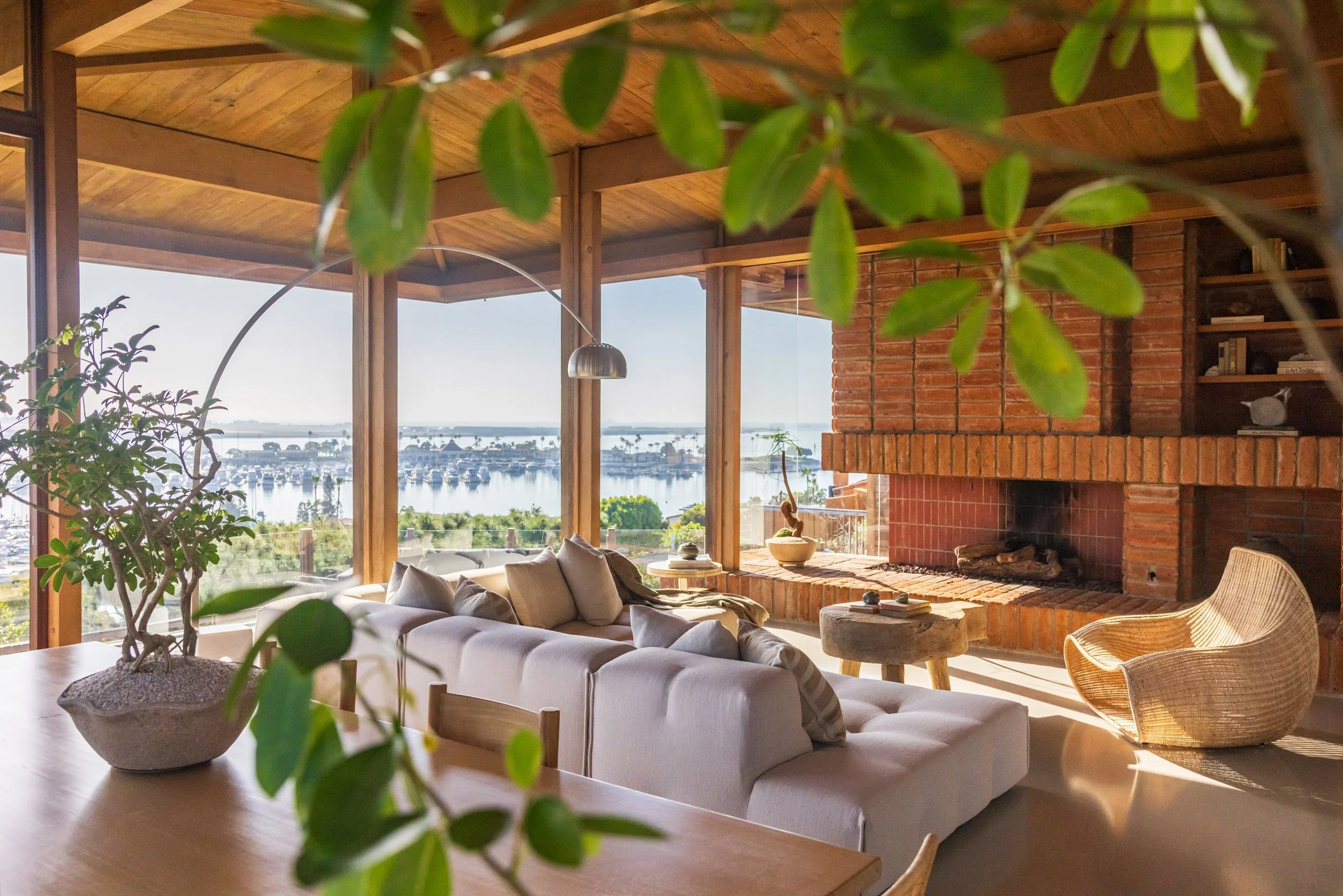
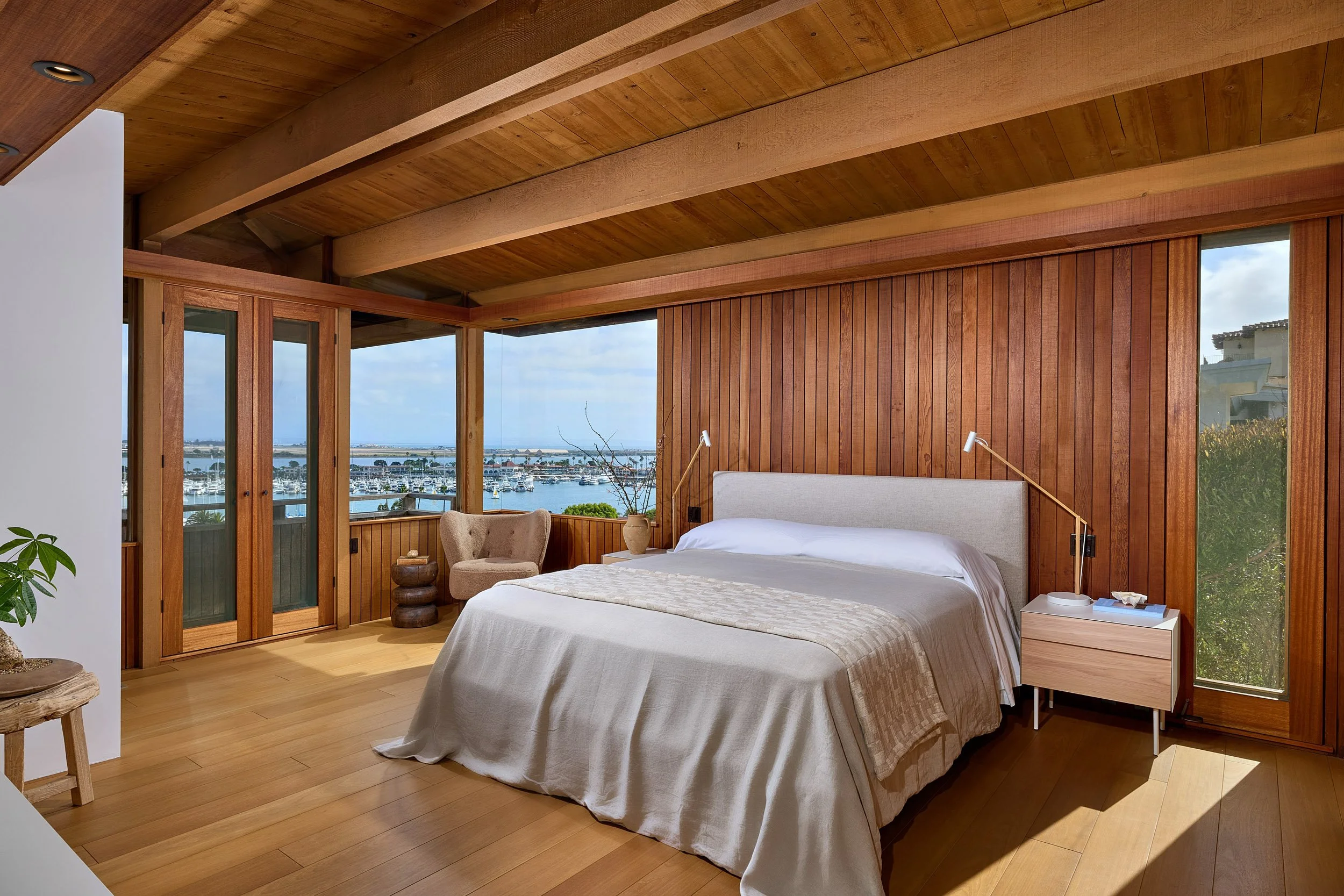
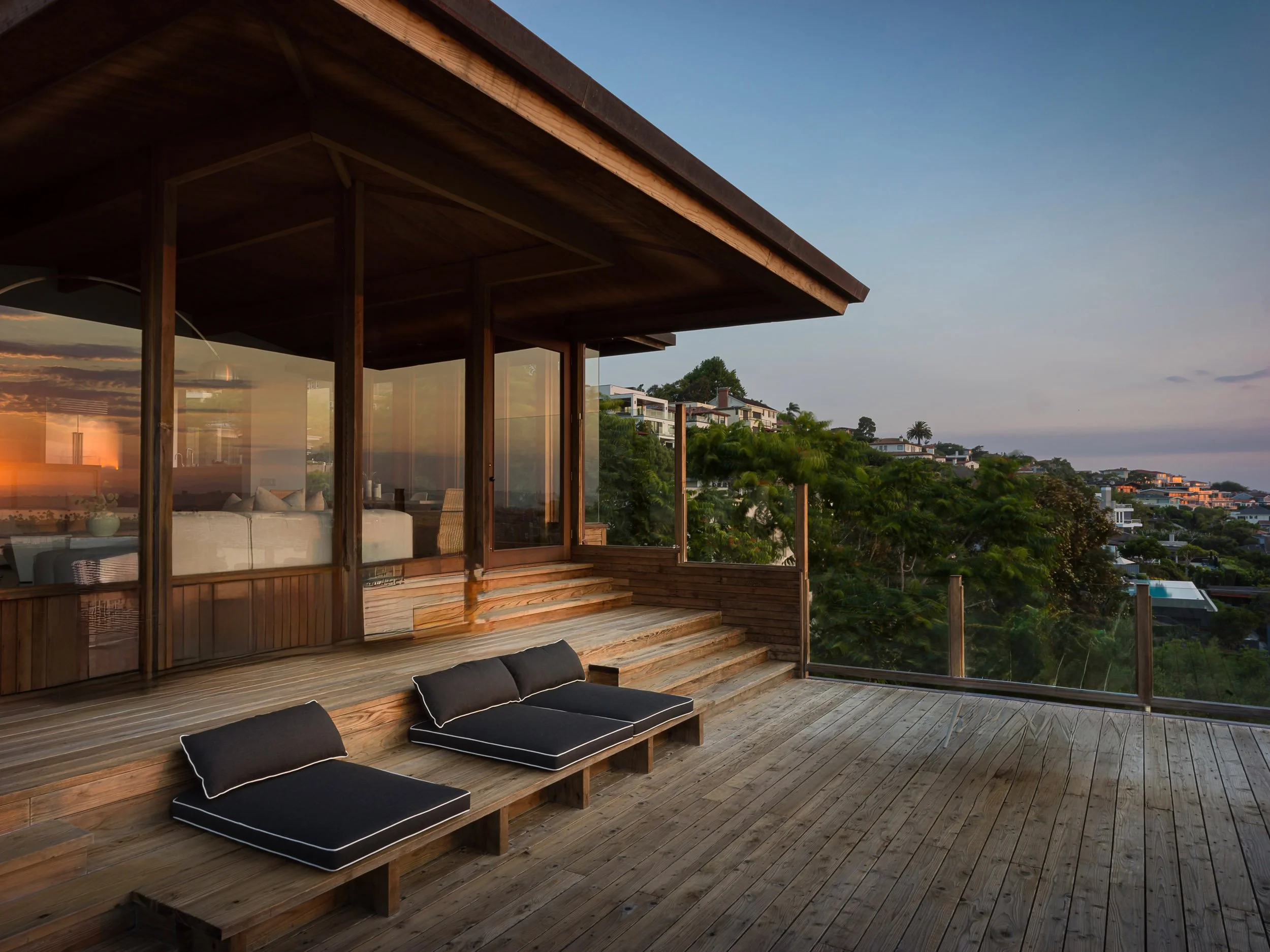
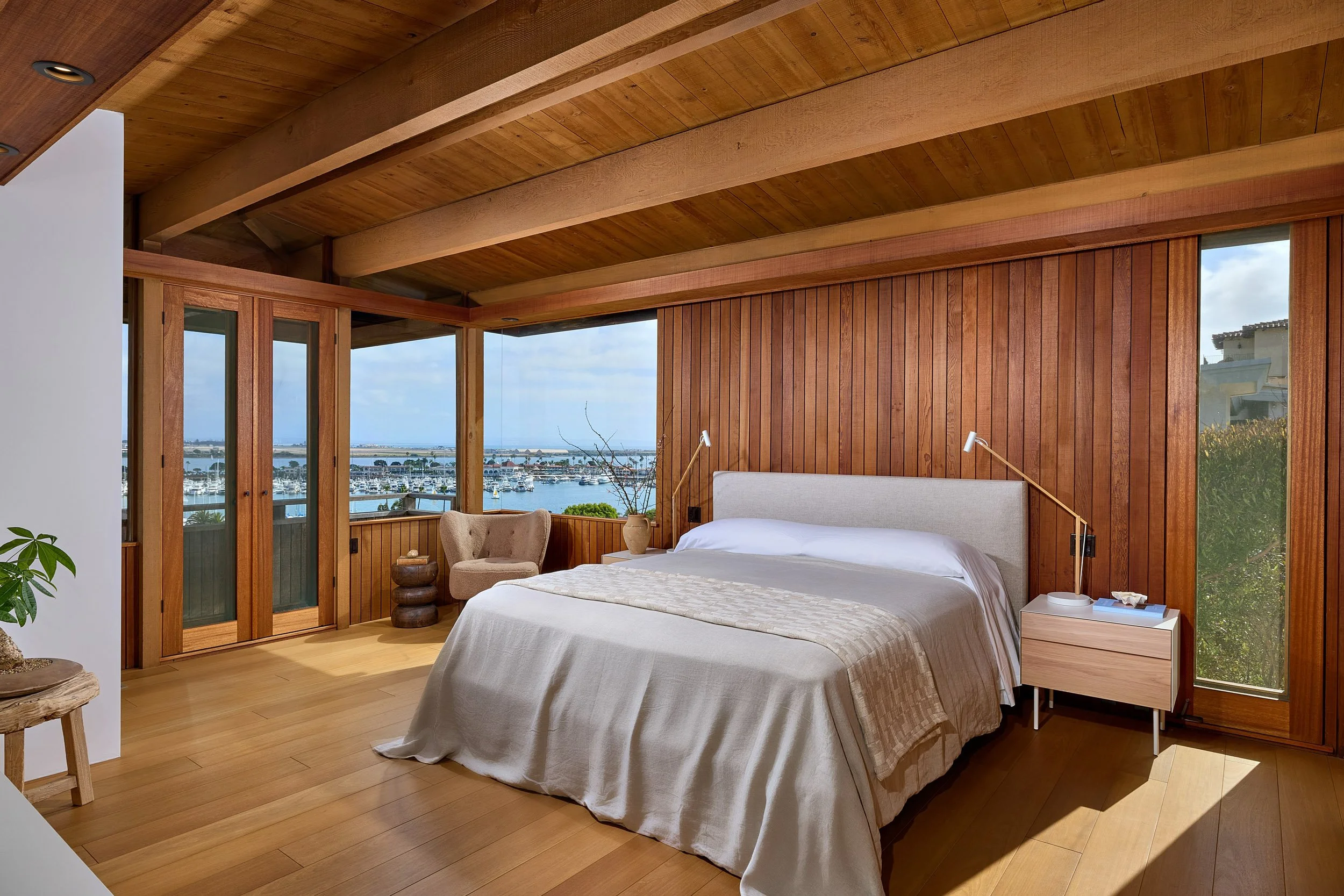
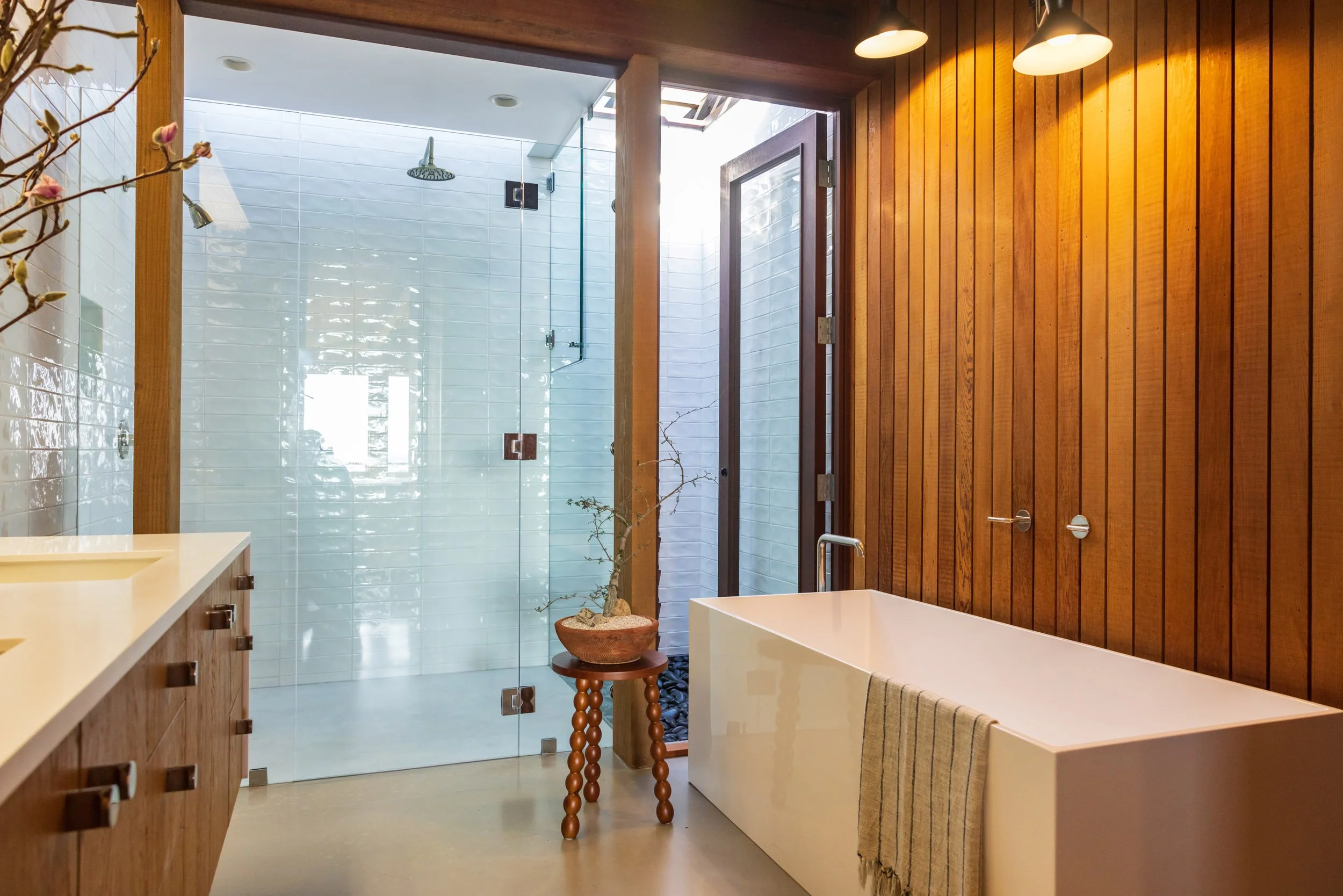
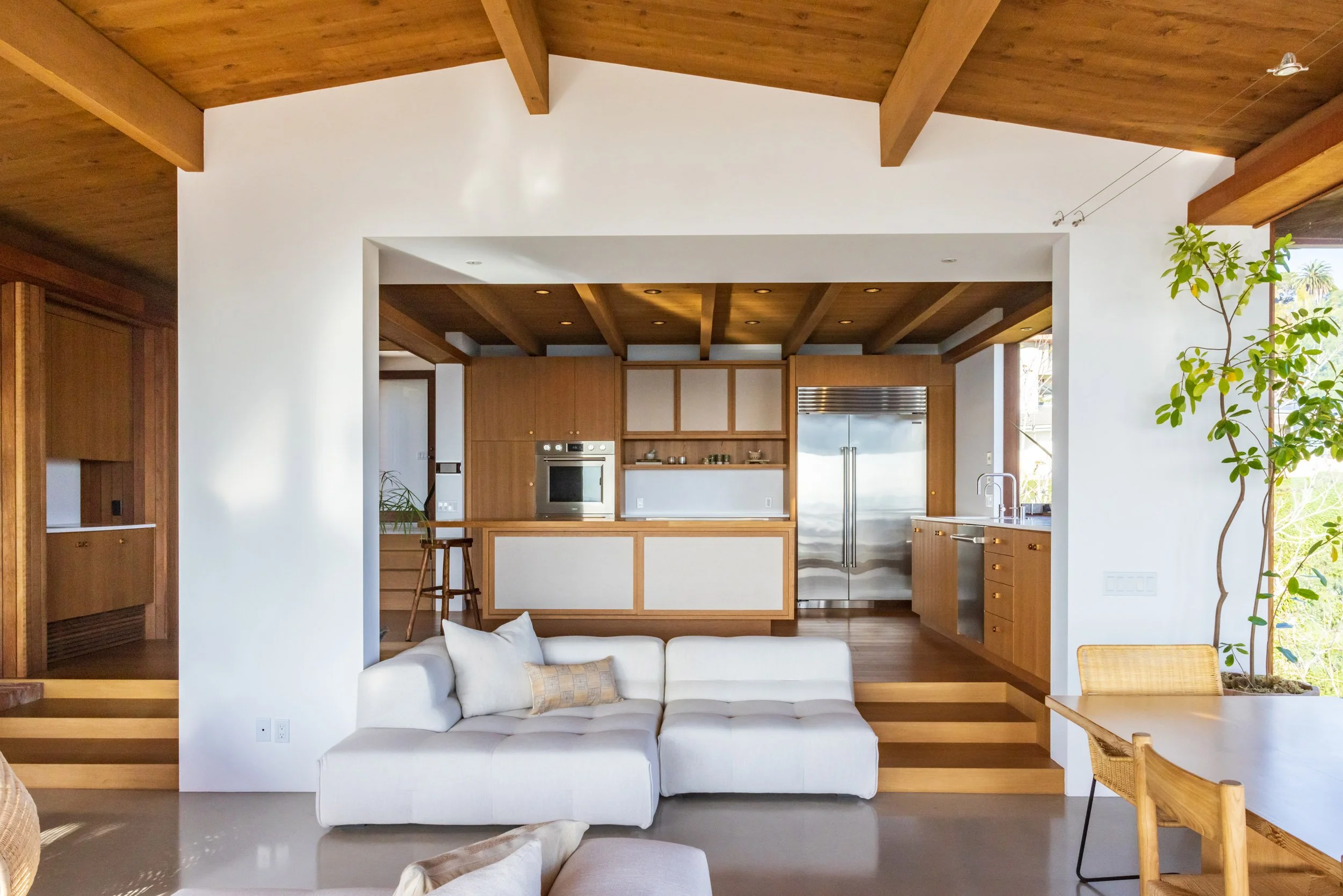
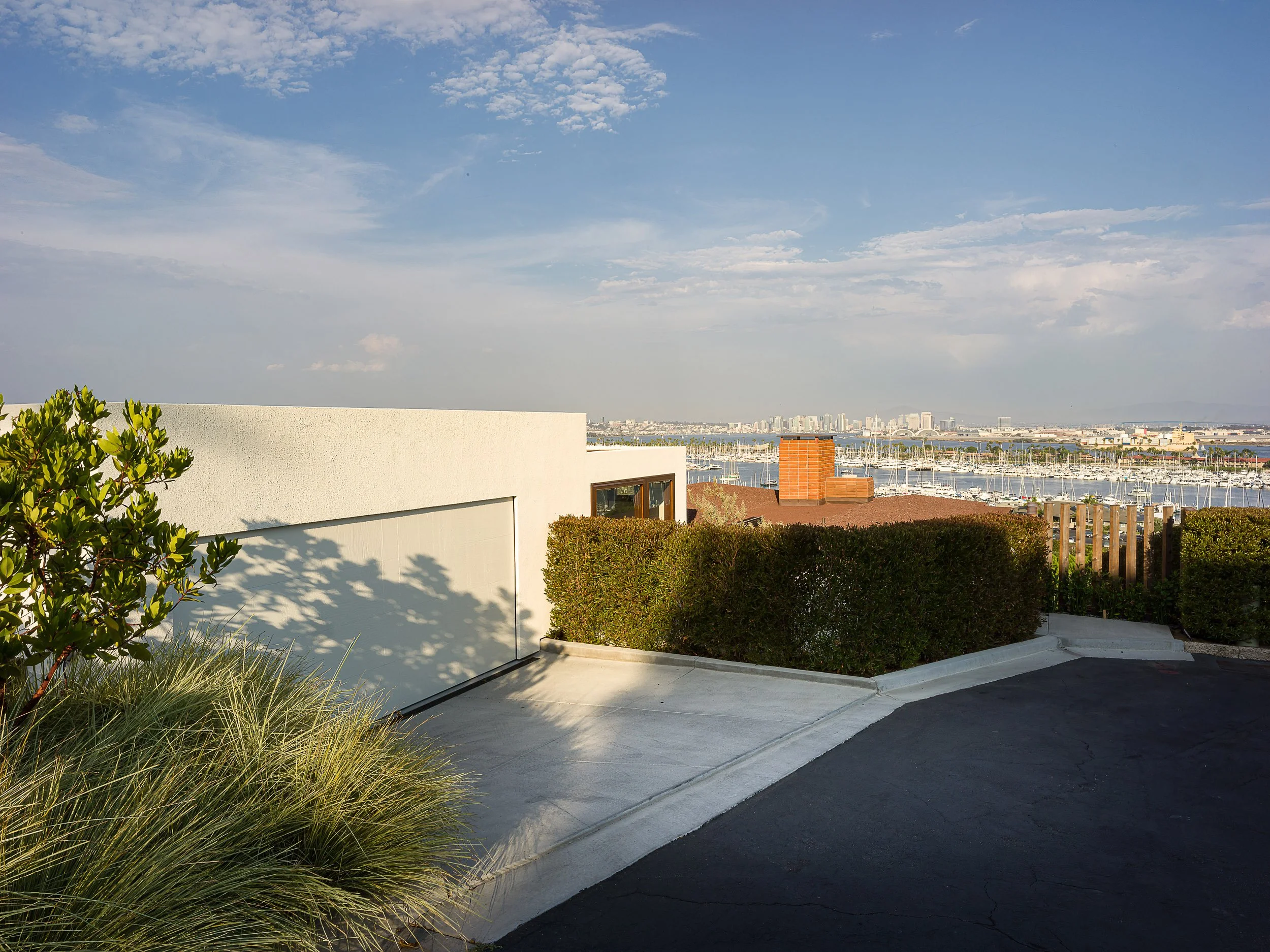
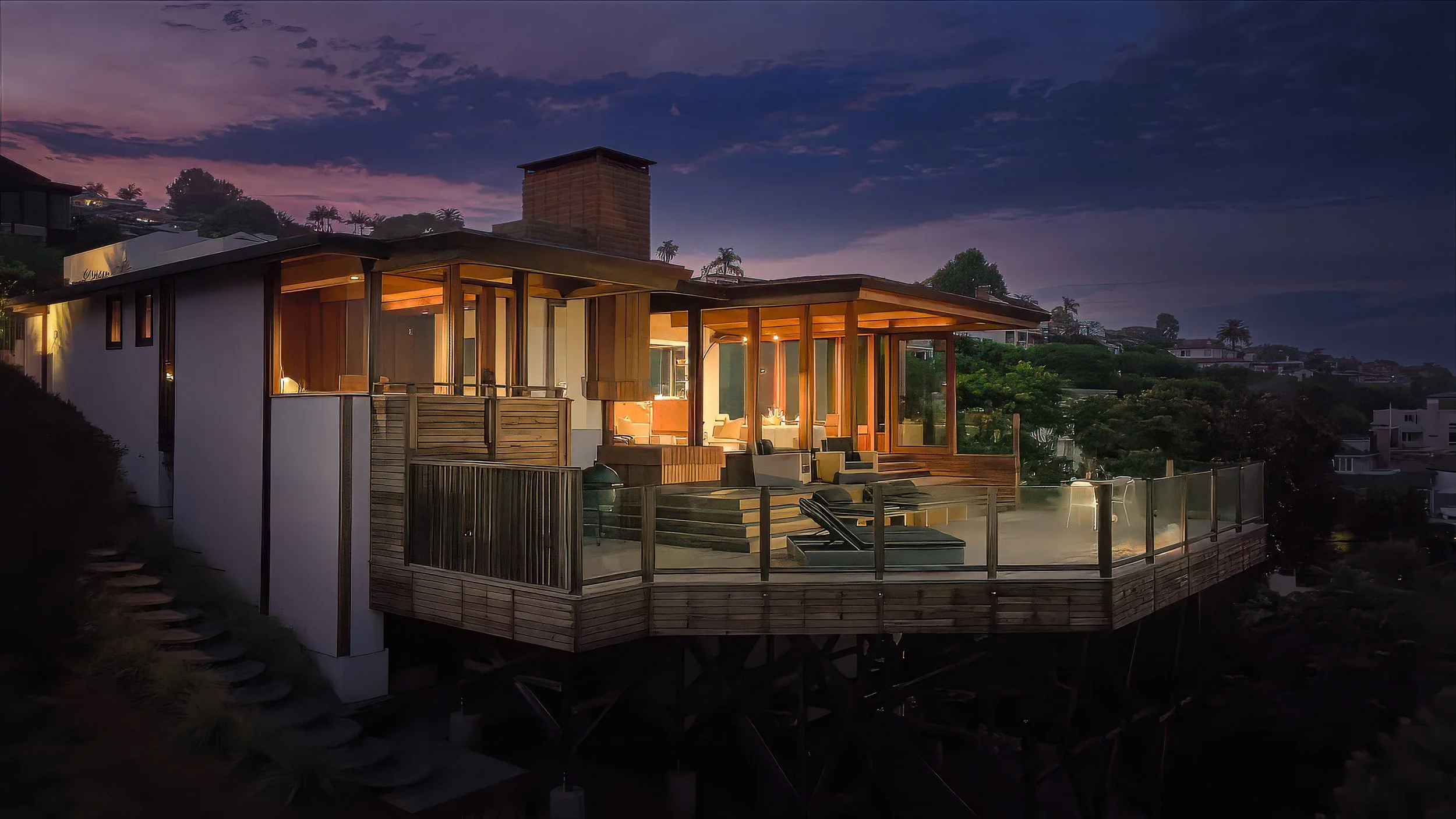
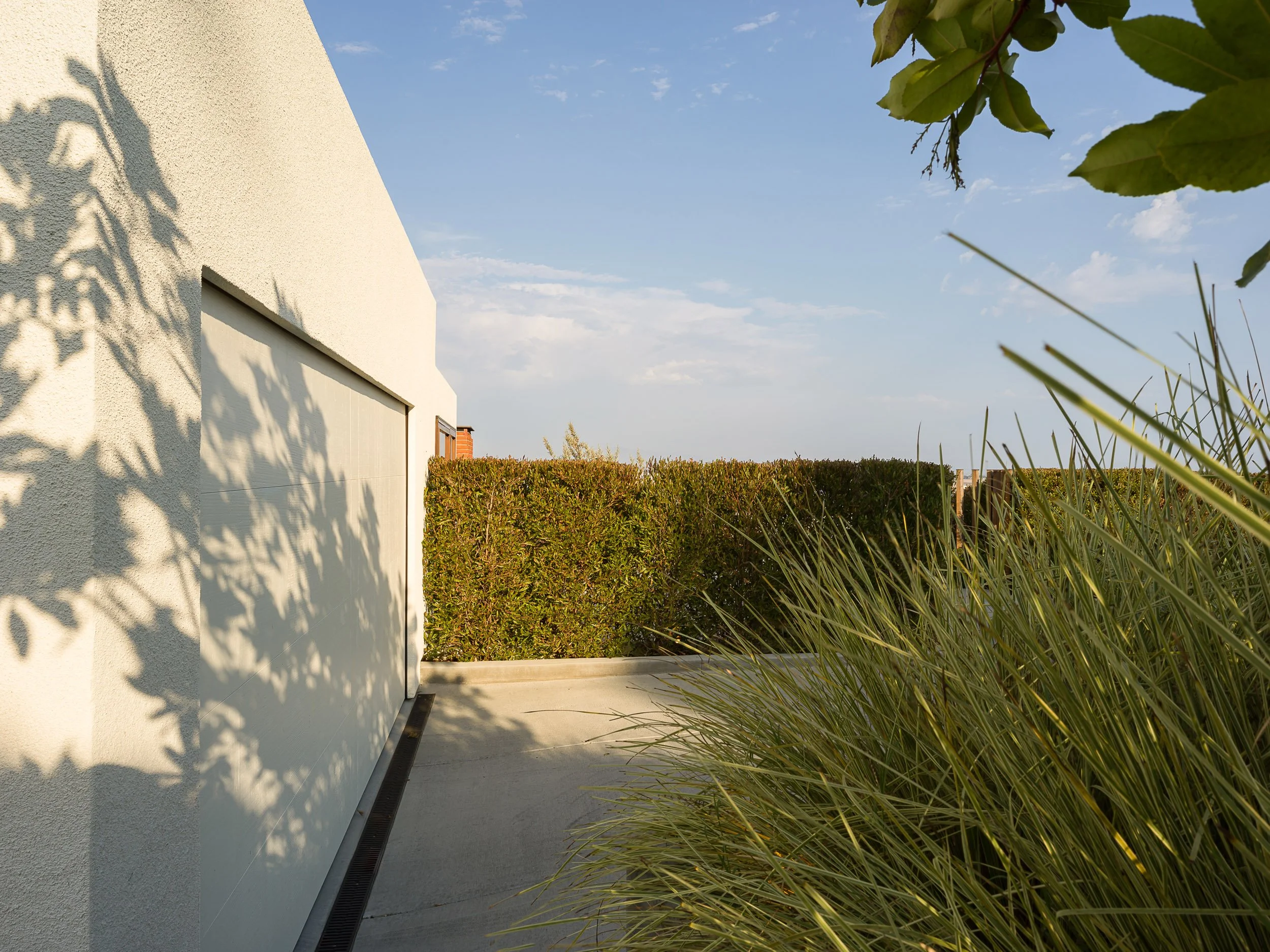
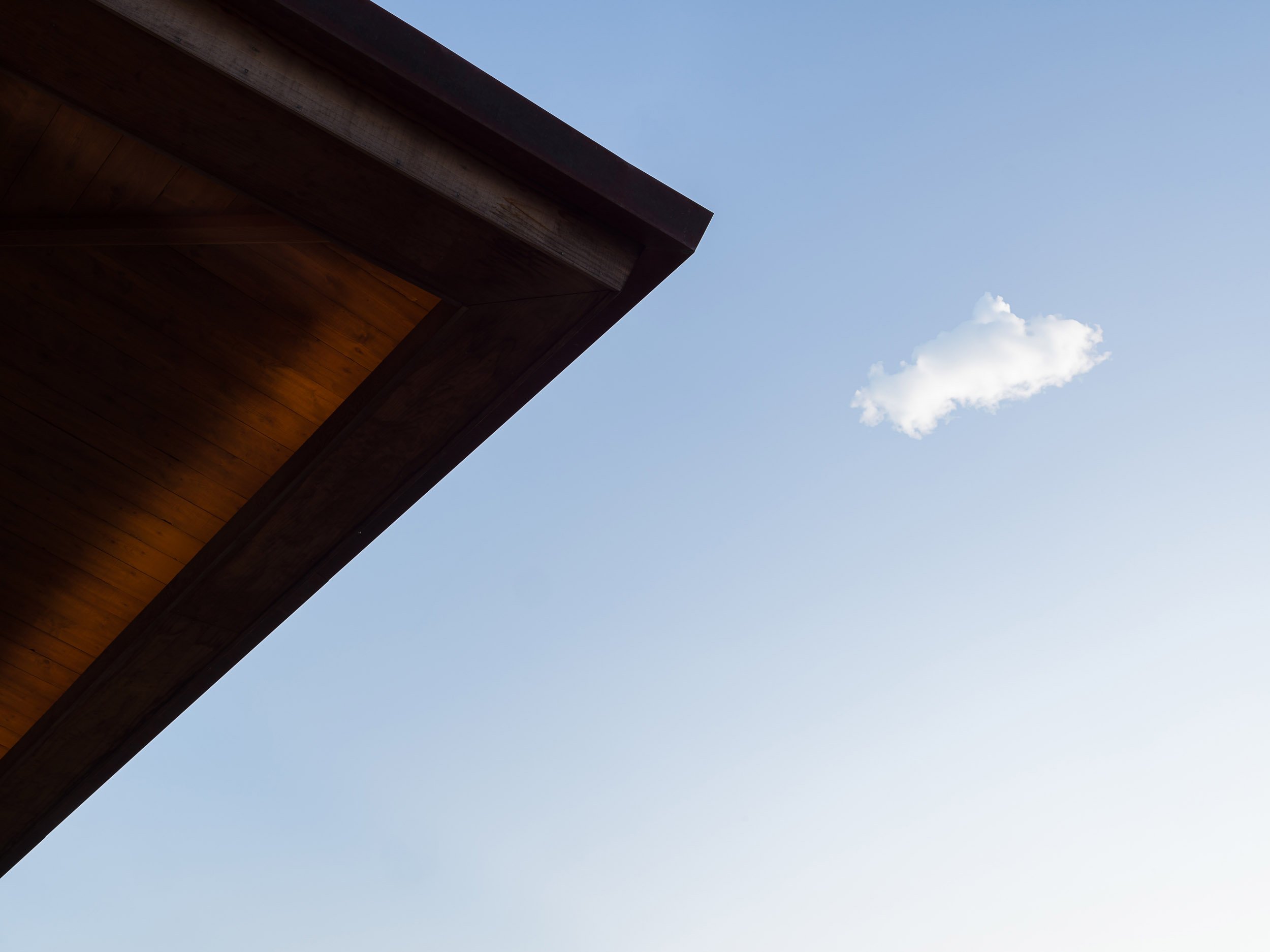
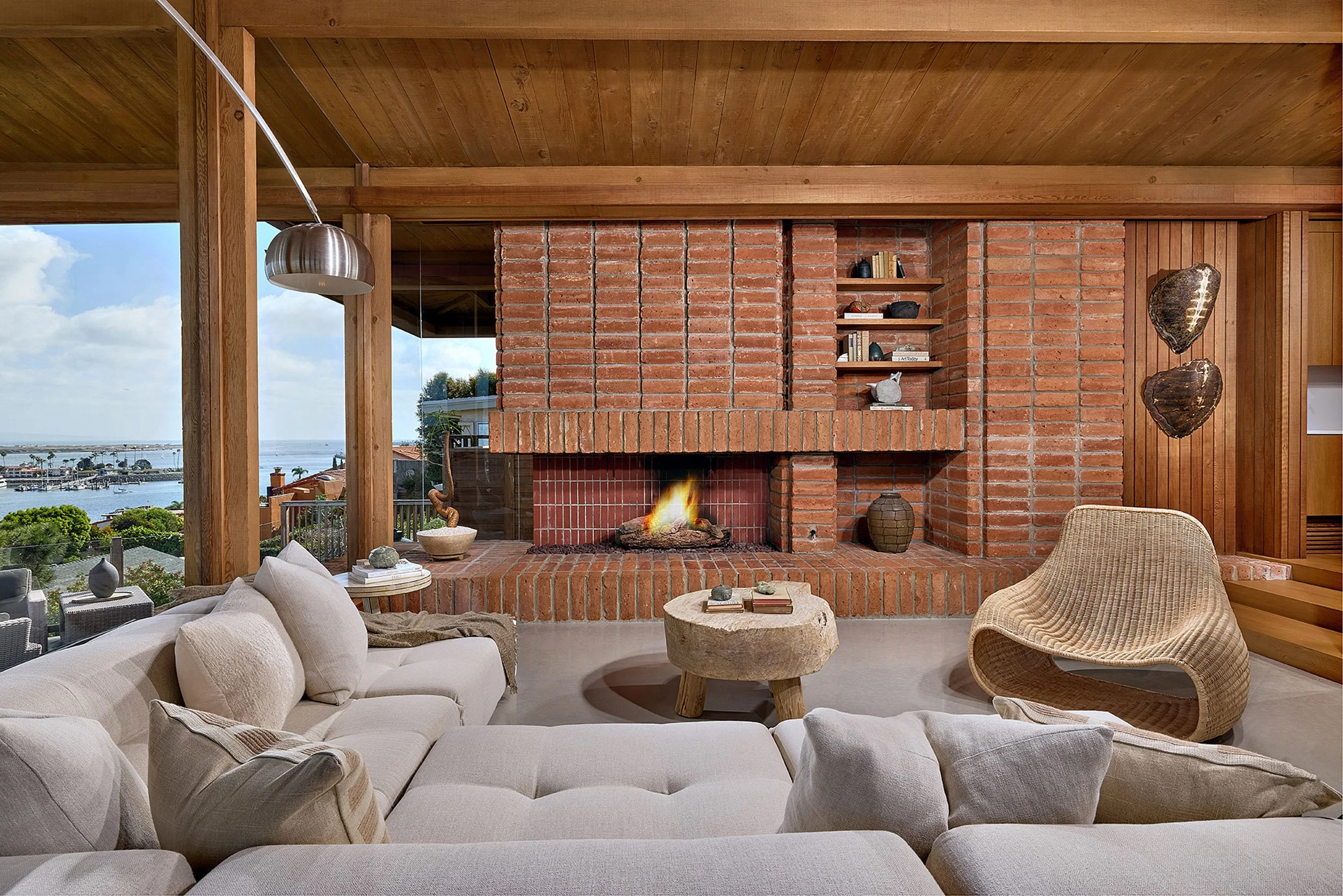
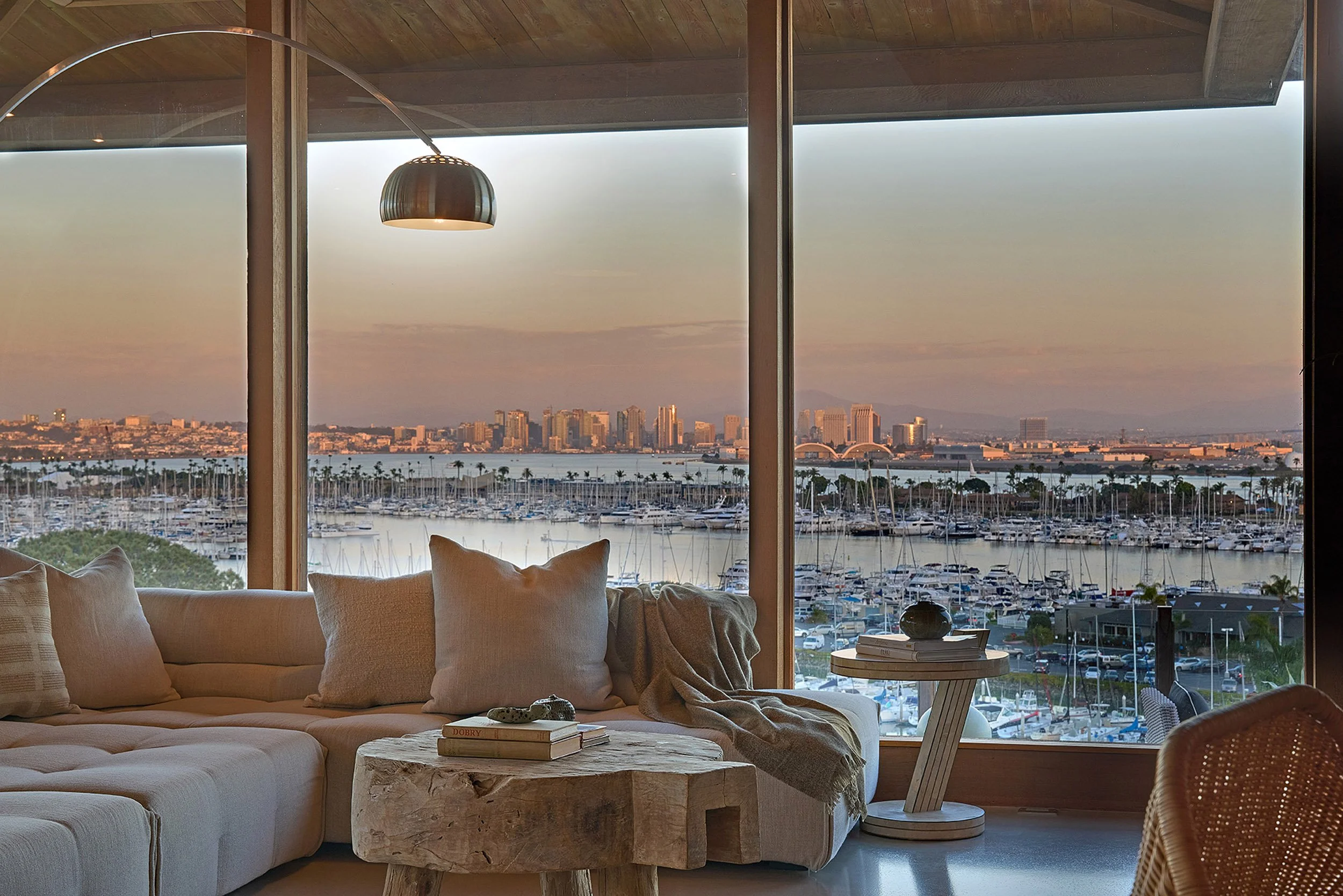
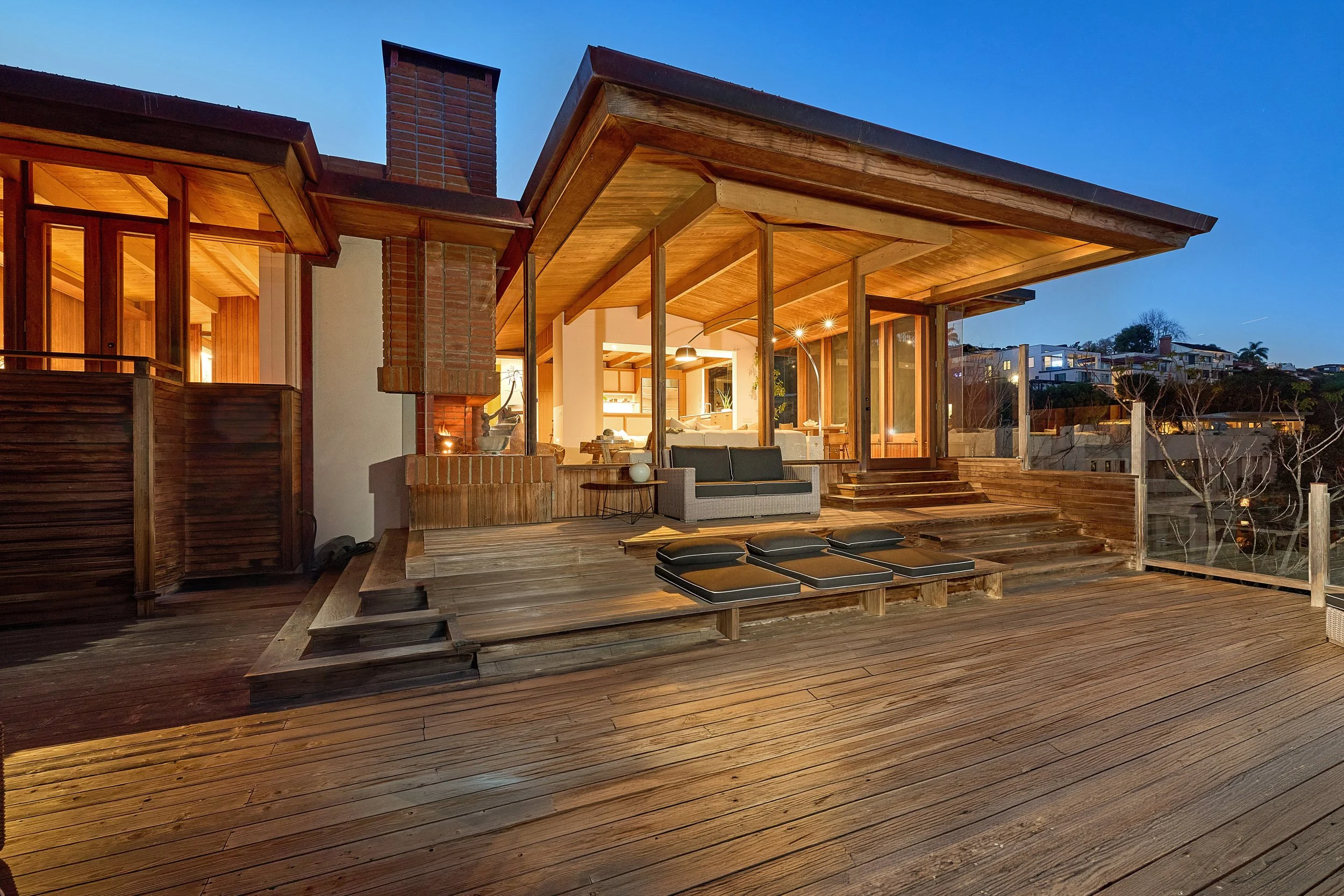
Nothing can prepare you for this view. Layered. Unfolding. It seems to blossom before you, a vaulted ceiling and a band of floor-to-ceiling windows opening itself fully to the bay, the marina and Pacific Ocean beyond. Designed in 1968, this is one of the earlier examples of his nature-inspired work featuring rough-sawed wood and signature brick fireplace. The interplay of materials creates immense warmth Lighting and textural detail reveal surprising intimacy.
In 2022, the home underwent an extensive renovation under the direction of master craftsman Larry Richards, ensuring its architectural narrative will endure for generations. Richards restored Kellogg’s original vision for the arrival experience, central living space, and primary bedroom while the rest of the house was completely renovated for a modern blueprint. A new kitchen features custom cabinetry (to match the original wood) as well as motorized cantilever windows.
Two ensuite bedrooms—both with bay views—are extremely livable and airy. There are new bathrooms, a laundry room, a two-car garage, new heating and AC systems. Plus: new wood and concrete floors.
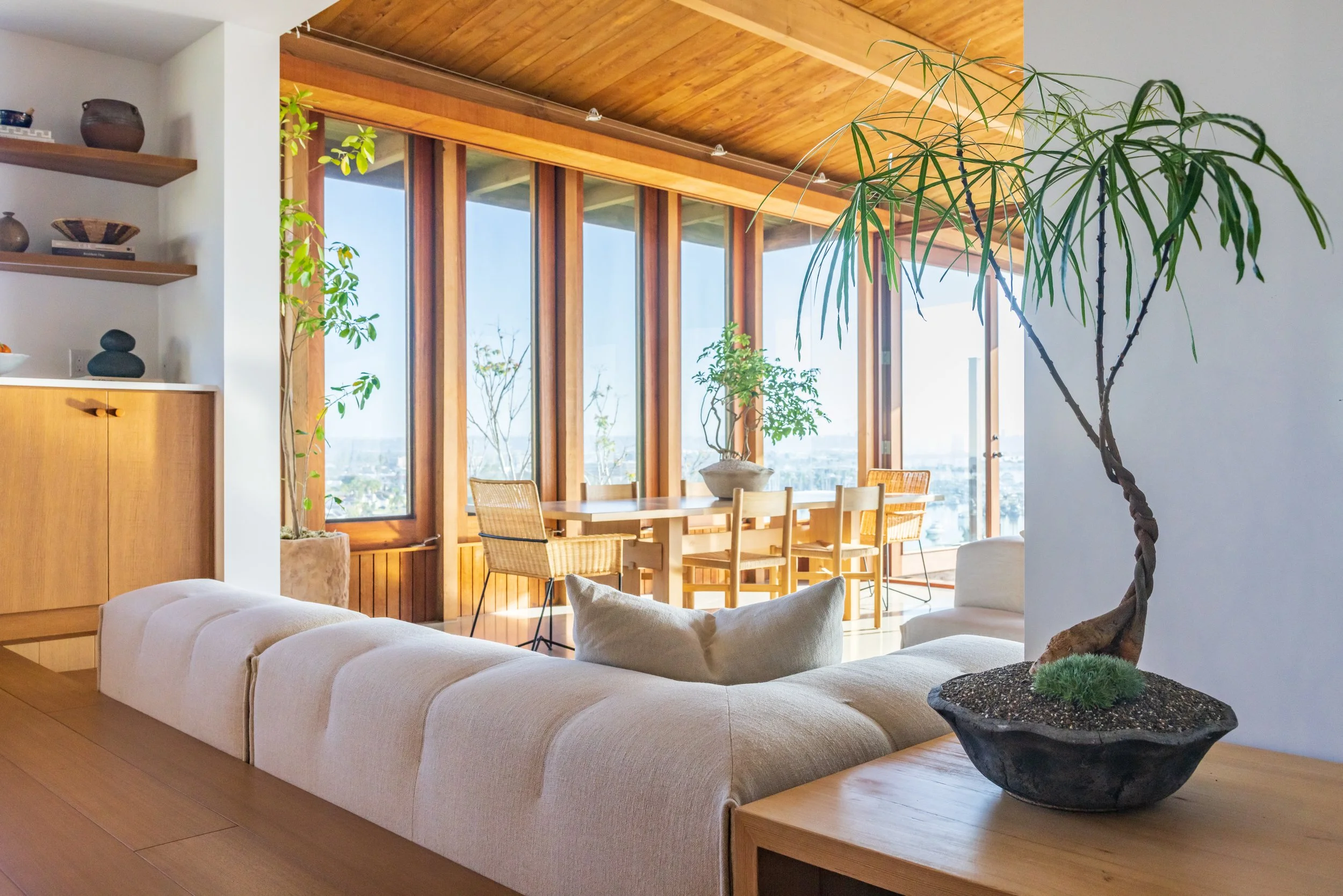
A Happy Place. No, seriously.
The sought-after retreat is a testament to how architecture can shape feeling. Consider it a prototype for neuroaesthetics—the study of how environments affect emotional and physical well-being.
The interplay of natural materials and light enhances the fluid connection to the outdoors, reinforcing the home’s organic feel while creating a palpable warmth. The views are active, changing throughout the day and night.
The refined layout carefully balances privacy with shared spaces. Location with lifestyle. The main living room and primary bedroom occupy opposing wings, a subtle separation promising household harmony.
Situated at the end of the road, the house is crafted to dramatically embrace the breadth of its site, echoing Frank Lloyd Wright’s compression and release technique. The low-scale arrival and stairwell unfurl to expansive views. Kellogg was, in fact, deeply influenced by an early career encounter with Wright, but decided to pursue his own vernacular rather than become a disciple.
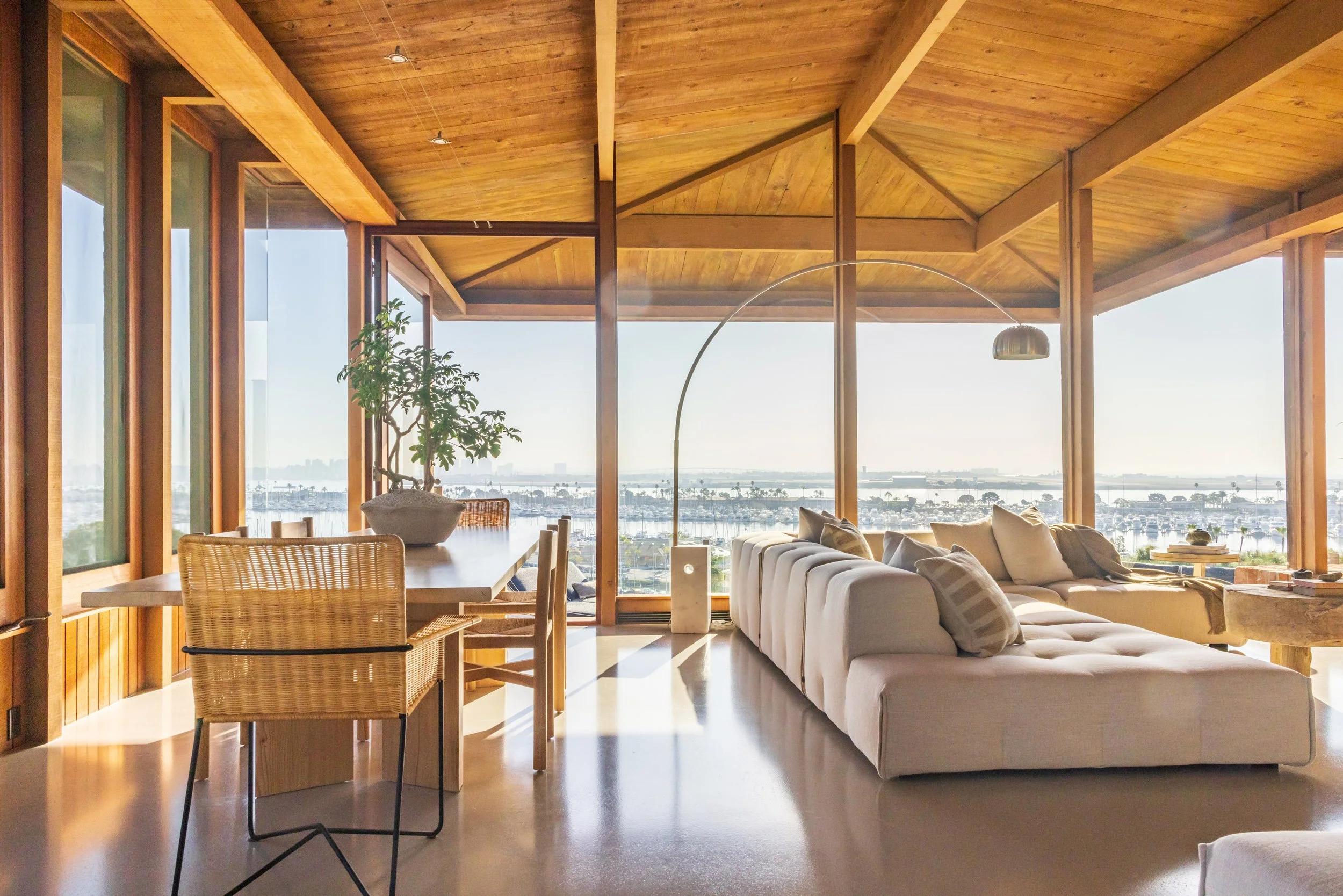
This Kendrick Bangs Kellogg house shapes a state of mind. It honors Le Corbusier’s philosophy that architecture is the ultimate tool for elevating the human experience.
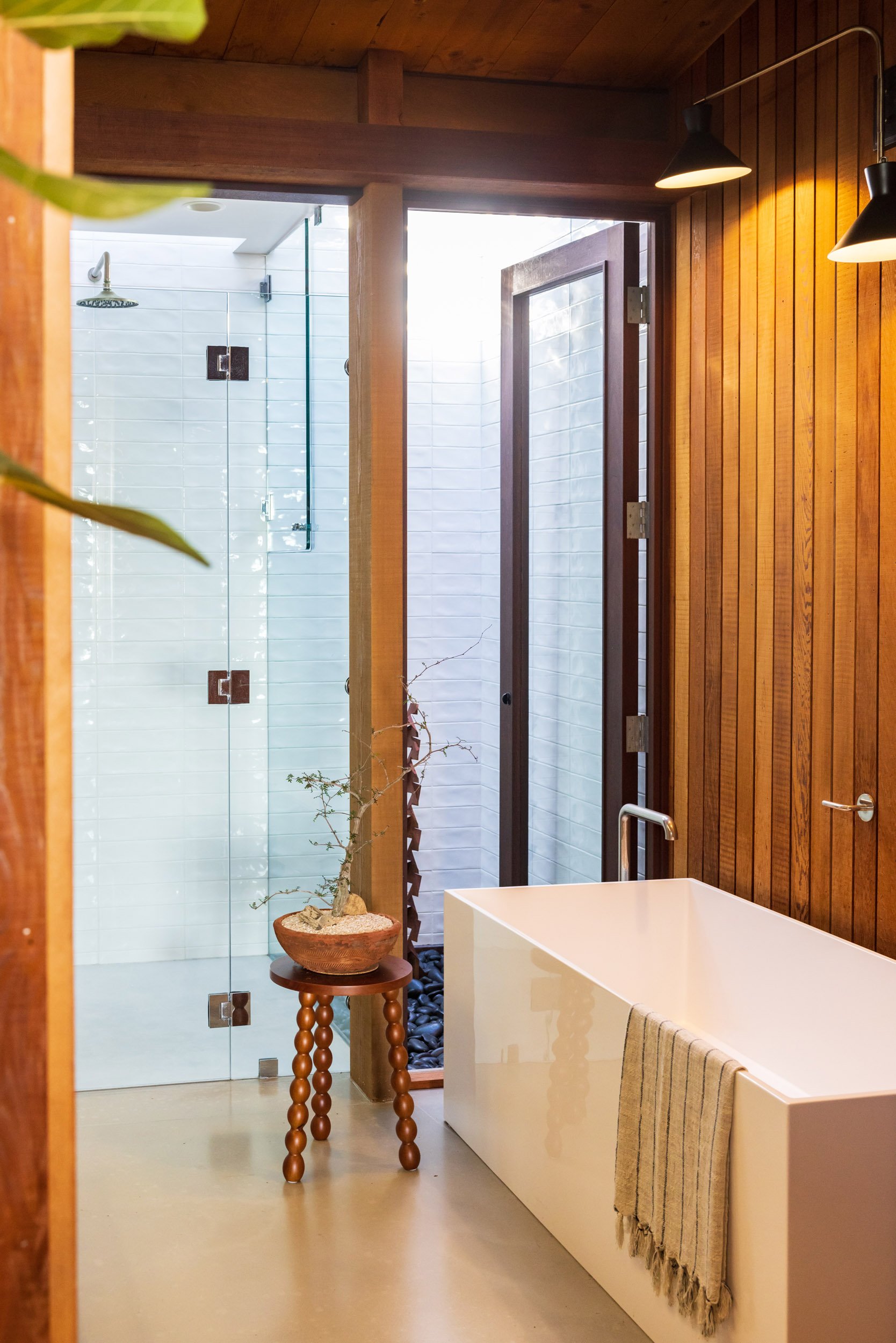
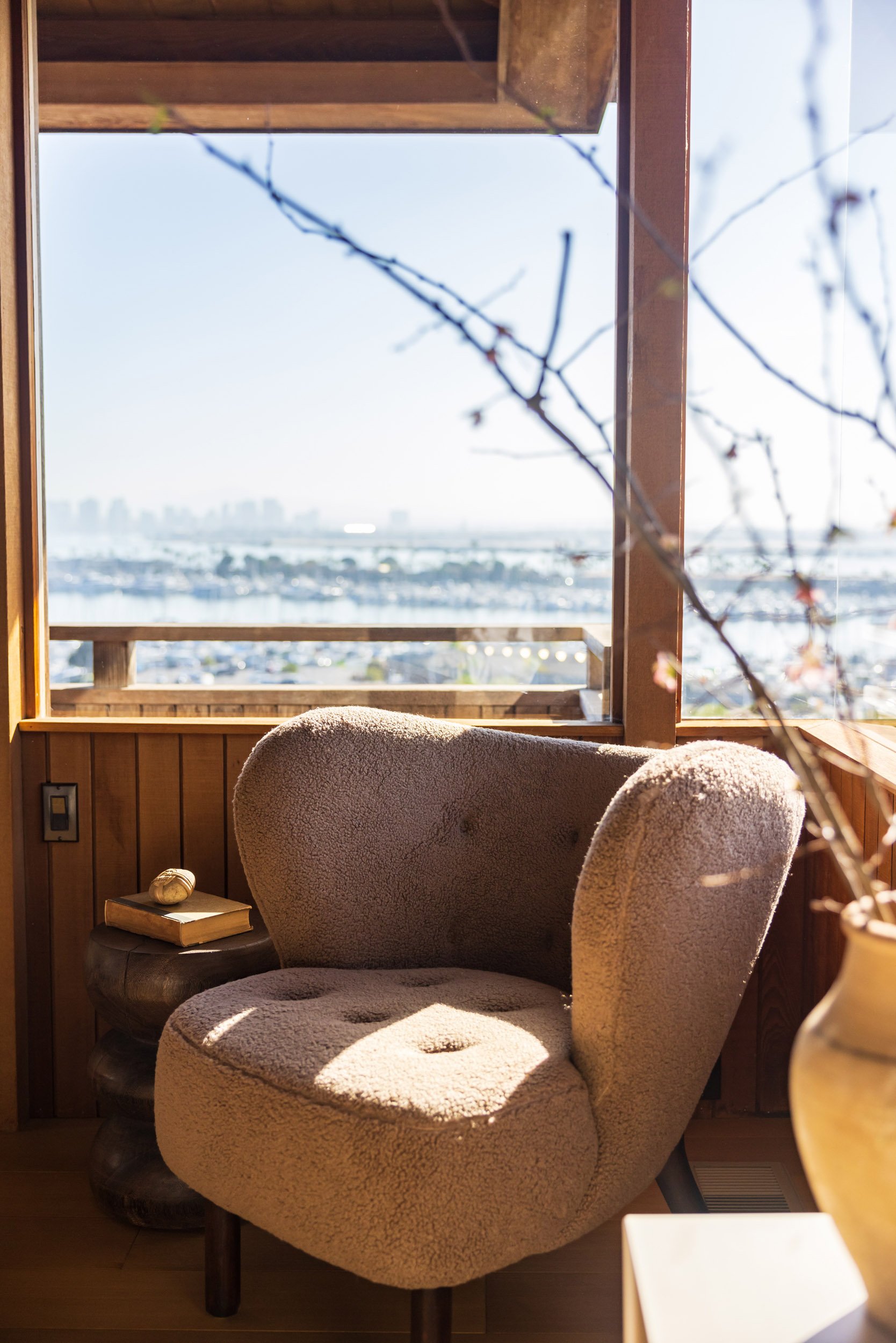
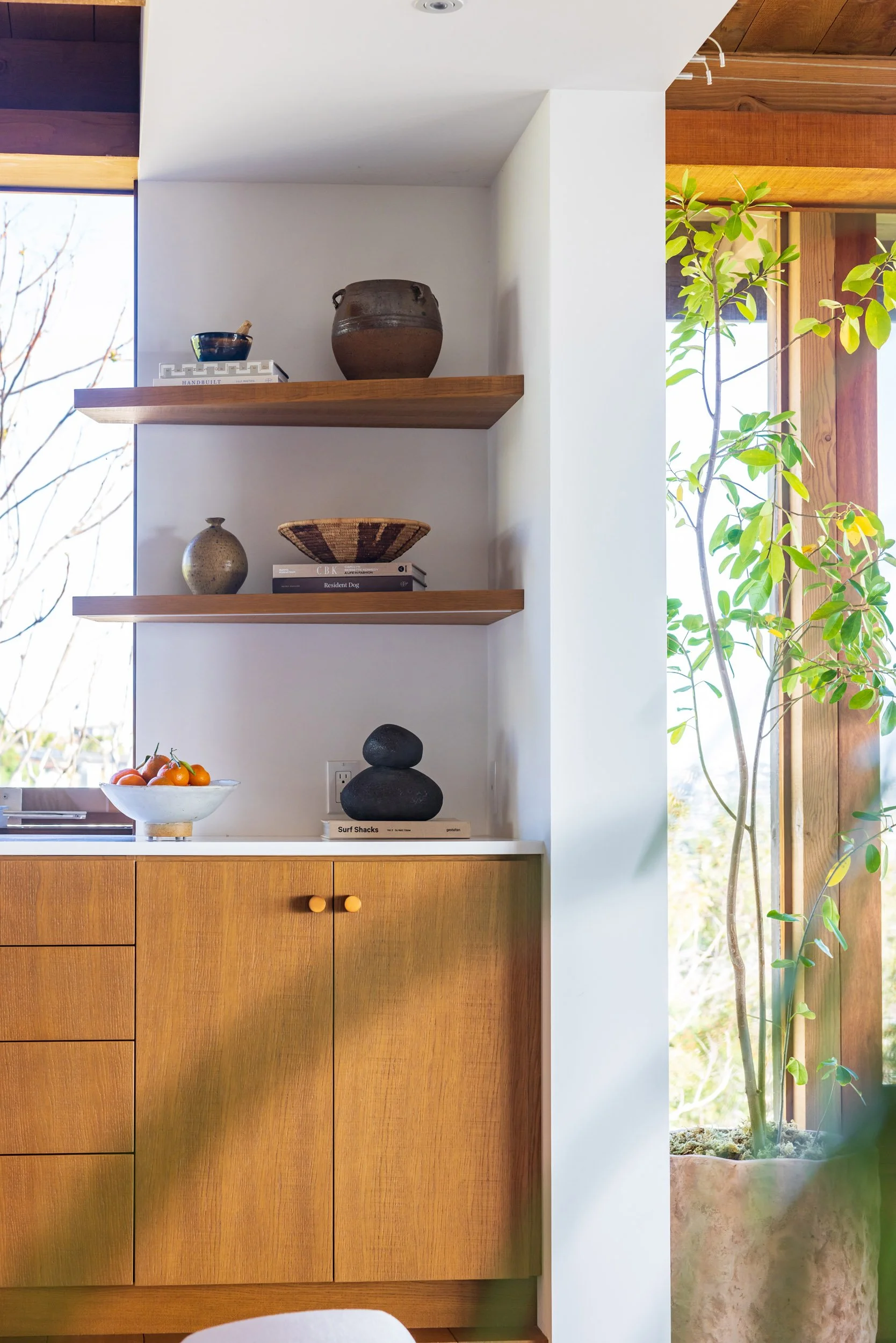
Featuring natural light and sweeping views, the house was restored to allow for its existing narrative to continue for years to come. The material palette of timber and concrete grounds the home in place.
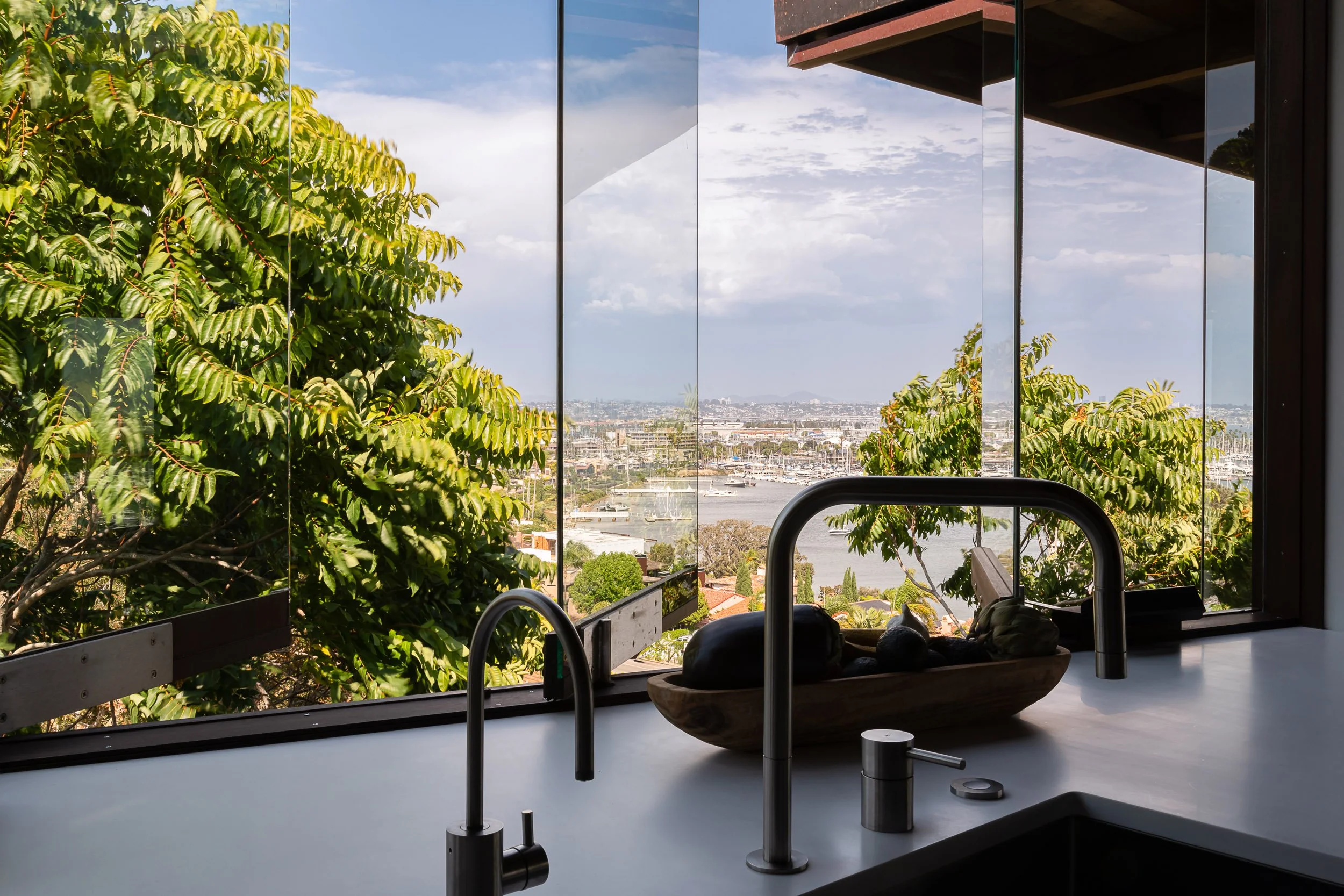
Rooted in Nature.
The Kellogg-Hubbell Legacy
Everything from a window to a door knob is artistic expression in the hands of late San Diego artist James Hubbell. “The process of making for him is like breathing,” says architect Kyle Bergman in the documentary ”James Hubbell: Between Heaven and Earth.”
The creative synergy between Kellogg and Hubbell took shape over three decades. In glass. In mosaic. The debut project was the Onion House in 1961-62 where Hubbell created 29 stained glass windows against volcanic rock walls.
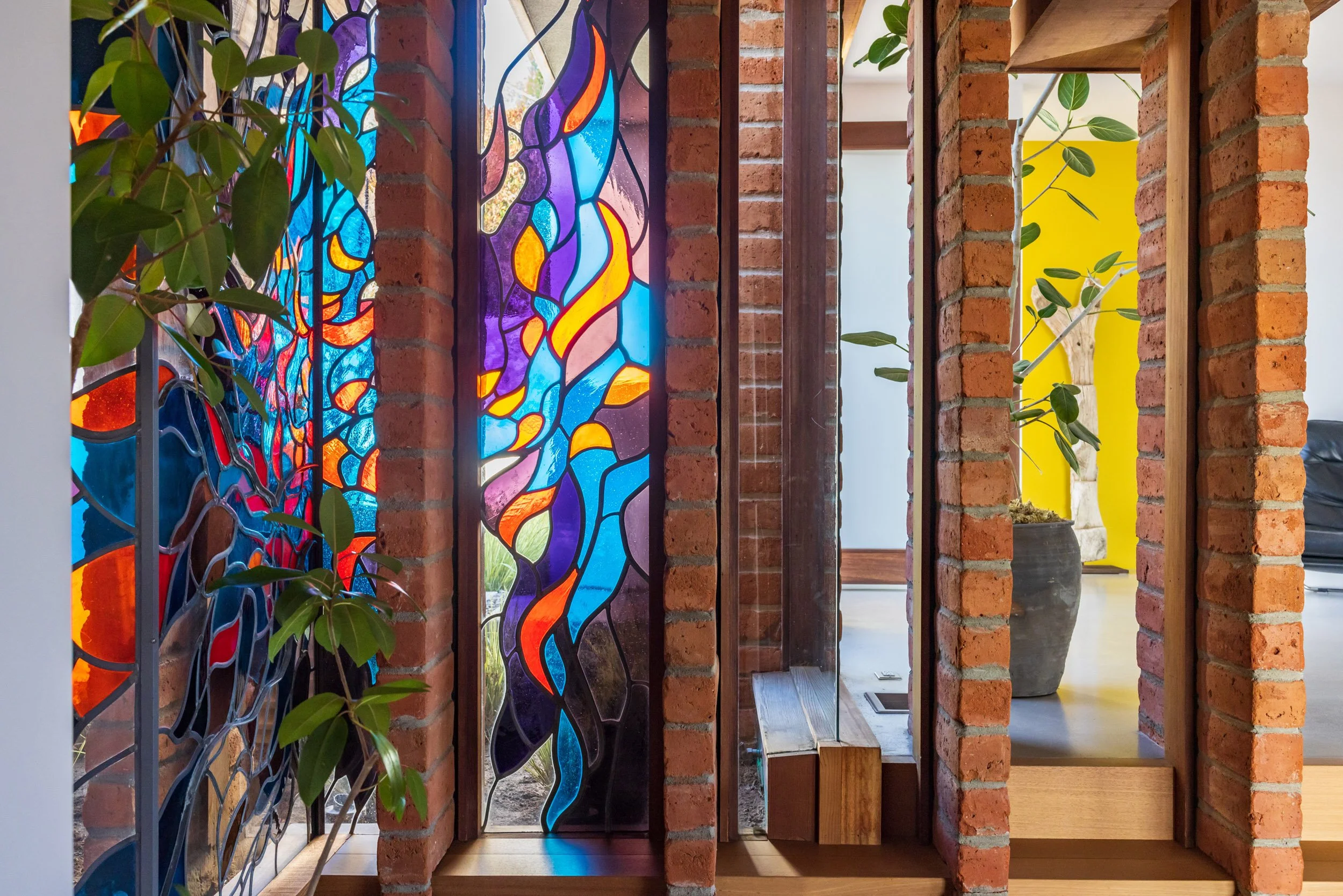
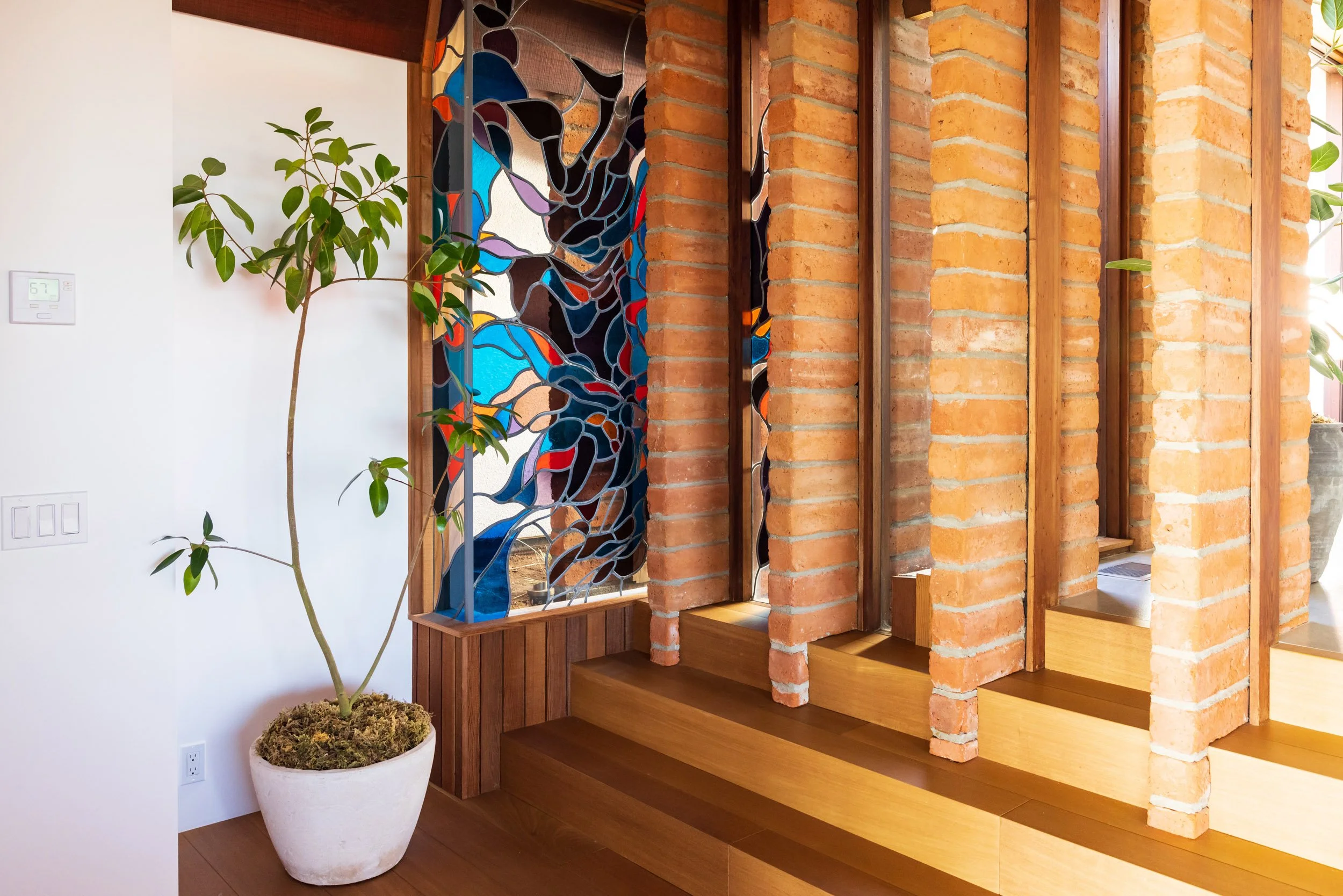
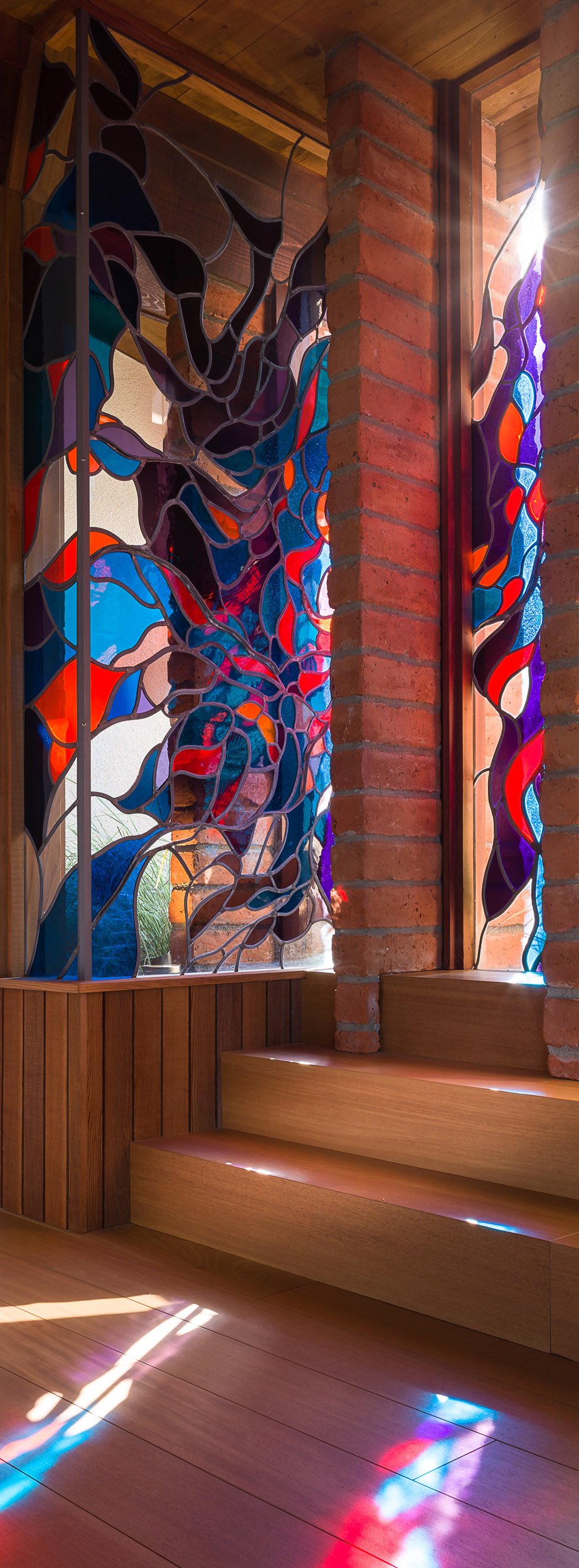
At 3061 Rogers, the entrance is anchored by rhythmic, wave-pattered stained glass that wraps around Kellogg’s linear brick pillars. The movement of colored light echoes the tide below while casting a kaleidoscopic reflection on the wall. It’s pure harmony.
“There’s something about the beauty that is immediate and alive,” says Oxford professor Suzanne Sklar of Hubbell’s work. “It gives life and it changes perception. Beauty connects.”
You can read more about the pair’s collaboration at Hubbell’s Ilan-Lael Foundation. This spring, Hubbell will be part of an exhibit at Oceanside Museum of Art.